Showing posts with label Games. Show all posts

Monday, May 18, 2015

Is Sega Dead?


It’s clear to anyone paying attention that Sega has been on a general downhill slide for the past two decades. Once a titanic presence in the video game industry, one that held its own against Nintendo and every other competitor between the mid-’80s and mid-’90s, Sega has gradually lost much of what made it special.
The reason, according to former Sega CEO Tom Kalinske in an interview with Game Industry, is that the company has “made the wrong decisions for 20 years.”
Which begs the question: Is Sega doomed, or can it bounce back?
To answer that, we’ll need to look at the problems, which began in the mid-’90s, right around the time Kalinske left the company. Prior to that, Sega was a force to be reckoned with in the video game industry. Its Genesis console was home to numerous classic games, including many made by Sega itself, like the Sonic the Hedgehog and Phantasy Star series. Nintendo and Sega were fairly evenly matched, with the Genesis selling a respectable 40 million units during its lifetime, compared to the Super Nintendo’s 49 million.
The bad decisions, Kalinske says, began when the company’s board rejected his plan to cooperate with Sony to build a new console after the Genesis. According to the plan laid out by executives from both companies, Sony and Sega would share the costs, initial losses, and eventually the profits of the hardware.
“Of course, in those days, we were much better at software than they were, so I saw this as a huge win,” Kalinske said. But when he and other Sega executives presented the plan, “the board turned it down, which I thought was the stupidest decision ever made in the history of business. And from that moment on, I didn’t feel they were capable of making the correct decisions in Japan any longer.”
Source: Sega

What might have become of a console co-created by Sega and Sony will never be known, but we do know that Sony went on to release the original PlayStation in 1994. The PlayStation would go on to become one of the most successful systems in history, selling 102 million units. That same year, Sega released the Saturn, which sold only 10 million units in its lifetime. Then, in 1999, Sega released the Dreamcast, which also sold a meager 10 million units, at which point Sega could no longer afford to compete in the console space.
In 2001 Sega became a software-only company, which it how it has operated ever since. Over that time, Sega has had its share of fine games, but it has also had a number of clunkers and has killed much of the goodwill for some of its biggest franchises.
The latest bleak news for Sega came in January, when the company announced it planned to close its San Francisco office, cutting at least 120 jobs and focusing on the “growth area” of digital games on PC and mobile.
How much interest Sega still has in making games for consoles remains to be seen, but its recent efforts have not been overwhelming successes. The company announced recently that Alien: Isolation sold about 1 million copies in its first three months on the market. That’s not terrible, but it’s probably less than Sega would have hoped for such a high-profile game based on a popular IP. Its latest two Sonic games for Wii U and Nintendo 3DS didn’t even manage to sell half a million units between them.
Source: Sega

The route Sega seems to be taking with its focus on digital games might be an even trickier one, although one it has had some success in of late. Sega has released a series of free-to-play games on mobile, including Sonic DashSonic Jump FeverCrazy Taxi City Rush, and Sonic & All-Stars Racing Transformed. These games have done well for the company, but the free-to-play market is relatively new, and has proven difficult to navigate for companies like Zynga.
Still, it seems as good a solution as any. Sega has been selling mobile games for years, so it’s a market the company knows well. If this is the best future Sega can make for itself, then that’s what it has to do to survive. Longtime fans might wish it would make more console games, but that’s not a plan that has worked out in the past.
“You have to really make a lot of mistakes to kill a strong brand,” Kalinske said. “I do think some great brands obviously have been destroyed, Atari being one of them. Why didn’t that survive? I think there’s a lot of bad decision making involved in killing brands like that. I hope Sega isn’t the same thing.”

9 Video Games You Can Play for 100 Hours or More

There’s something to be said for video games you can complete in an afternoon, but sometimes you want to dive deep into a game and play it for weeks or even months. The problem is, not many games are worthy of that much attention. Either the story dries up after a 15-hour campaign, or the game world simply isn’t interesting enough to keep your attention. But some games are special. Some games can support multiple play-throughs, or offer an interesting game mechanic that keeps you coming back for more. Others are so packed full of content that you can play for 100 hours and still not see everything the game has to offer. However they do it, games you can play endlessly are as special as they are rare. Here are nine games that fit the bill.

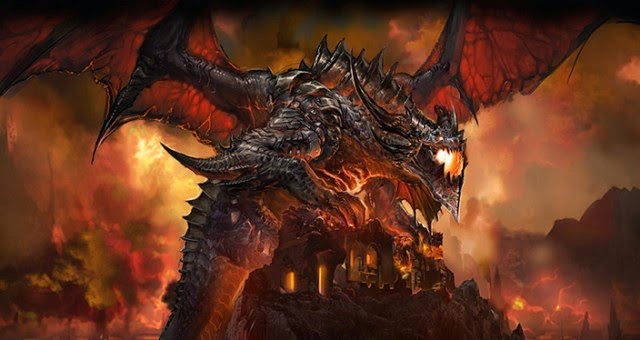
World of Warcraft

Every massively multiplayer online role-playing game (MMORPG) is designed to keep you coming back for days, weeks, months, and even years. The way developers accomplish this feat is by constantly updating their games with more and more content: more quests, more team-based dungeon raids, new areas to explore, and new gameplay mechanics to keep the experience from feeling stale. No game has done these things more consistently over the years than World of Warcraft. When this game gets its hooks in you, the amount of time you spend in it is only limited by your free time.
Source: Nippon Ichi Software

Disgaea 4: A Promise Unforgotten

Turn-based strategy games are like chess, but with extra layers of complexity. One of the deepest is Disgaea 4, a game that puts a party of characters at your disposal and has you deploy them on a grid to take out the enemy — but that’s just for starters. It’s packed to the gills with levels, weapons, armor, spells, and upgrade paths for each character. You can equip monsters to use as weapons and combine them to create new ones. You can permanently tweak the rules of the matches from within the game. Your characters’ abilities can even change depending on which tiles they’re standing on. In short, if you want to master all the aspects this game offers, you’re in for a long (but rewarding) ride.
Source: elderscrolls.com

The Elder Scrolls V: Skyrim

Some games give you a grand story and then force you down a linear path to experience it. Not Skyrim. This game drops you in an enormous, awe-inspiring fantasy world and lets you explore it in any way you see fit. See those mountains in the distance? You can hike to the top of them right now if you want to. There’s still a central story line to follow, but at any point you can cast it aside in favor of one of the hundreds of side missions that range from simple fetch quests to massive eight-hour stories that could be entire games in themselves. Even if you somehow manage to complete every quest in the game, you can download three bulky packages of additional content to play through, or endless mods on PC. Casting spells and fighting dragons has rarely been this engrossing.
Source: callofduty.com

Call of Duty: Ghosts

While the single-player campaign in any Call of Duty game only takes about a dozen hours to complete, the multiplayer mode is where most people spend the bulk of their time. In this mode, it’s usually two teams shooting it out to see who can earn the most kills. The reason you can easily spend 100 hours here is because the developers have built some very rewarding game mechanics that make it more fun the more you play. You can spec out your weapons by adding useful items like scopes and grenade launchers. You can gradually chip away at nuisances like recoil and reload times. As you play, you earn experience points that unlock additional perks and equipment, making it even easier to rack up higher kill counts. It’s as well-designed as a casino — but at least it doesn’t take your money.
Source: fallout.bethsoft.com

Fallout: New Vegas

Fallout: New Vegas is a lot like Skyrim, but with totally different trappings. New Vegas is set in a post-apocalyptic world where bottle caps are the currency and irradiated mutants live in the sewers. You can embark on quests both large and small, or just roam the desert and hunt mutated animals using a clever battle system called V.A.T.S. Essentially, V.A.T.S. turns the game’s real-time combat into turn-based shoot-outs in a deeply satisfying way. It even features the voice of Matthew Perry. Any way you slice it, New Vegas is an easy game to start playing, but a tough one to stop.
Source: DOTA 2 via Facebook

Dota 2

Like DisgaeaDota 2 is painstakingly deep. We’re talking Grand Canyon levels of depth here. As such, it takes effort to get into, but its legions of fans can’t get enough. Essentially, Dota 2 is an online real-time strategy game in which two teams of five players try to destroy the other’s base. Players can choose from over 100 “hero” characters that each offer unique abilities and take a lot of time to master. To succeed, your team needs to be well-balanced, with each player taking a specific role in the overall strategy. It’s a lot to wrap your mind around, but many devotees have regular game sessions with friends and spend upwards of 1,000 hours figuring out reliable strategies.
Source: pokemon.com

Pokémon X/Y

You’d be forgiven for thinking Pokémon is a series for kids. Its main characters are children, after all, and it has spawned multiple animated series and movies. But, despite all that, these games can easily support hundreds of hours of high-level play. If you’re serious about Pokémon, you can spend scores of hours collecting all the monsters in the game, breeding them together and working on their stats until you’ve shaped them into finely tuned weapons. It’s not glamorous work, but judging by the size of the dedicated fan base, it certainly appeals to a large number of gamers.
Source: Minecraft via Facebook

Minecraft

Minecraft is one of those ubiquitous games that just about everyone under 20 has played — often obsessively. Kind of like a digital set of LEGOs, Minecraft lets you create just about anything you want out of the various blocks it offers. If you search Google for incredible Minecraft creations, you’ll discover that people have made just about everything in the game from cities and castles to working roller coasters and graphing calculators. It’s incredible what you can build with a little planning and artistry. Oh, and a whole lot of time.
Source: civilization5.com

Civilization V

In Civilization V, you control a group of people from the beginnings of civilization onward. The goal of the game is to turn your small tribe into a world power by the year 2050. Each group gets a particular boost, so if you choose to be the French, you get a culture bonus that will help you earn a cultural victory. The Germans, meanwhile, have a military bonus to help them achieve world domination. You can set all kinds of parameters, like your starting era, how many continents are in the world, and the number of other civilizations you’ll have to compete with. An average game takes between six and eight hours to complete, but if you want to try out everything the game has to offer, expect to gladly hand over several hundred hours of your life.

6 Non-Violent Video Games That Are Actually Worth Playing

6 Non-Violent Video Games That Are Actually Worth Playing


Video games have been foregoing the typical run and gun gameplay approach lately. Taking out violence altogether, players are left with a game that’s more about exploring a point of thought or experiencing something, as opposed to destroying point A to get to plot point B. Blockbuster shooters still rule the roost with games like Call of Duty, however, there are more and more “adult” games (i.e. not music or learning sims) coming out with no violence necessary for completion. In the games listed within this article, there are no guns or fist fights. These games take an alternative route to the AAA titles that have become so popular and add exploration, exposition, and thoughtful gameplay mechanics — proving there’s more than one way to move a plot along than with the barrel of a gun.


Fez

If you’ve ever read the satirical novel Flatland: A Romance of Many Dimensions, then Fez’s premise will sound familiar. Gomez lives a peaceful, 2D life, but when an event shakes his worldview, he becomes aware of a third dimension. Platformer, puzzle, and exploration define Fez’s gameplay. There are no bosses, enemies, punishment, or failure. It’s all about solving puzzles and stopping to smell the roses.

Dear Esther

Walk along a beautiful deserted island and listen to a story. While you explore a cave or an empty house, audio will cue to explain more about what happened there. Curiosity and love of narrative drive the game forward. There are no enemies or anyone on this island, which gives the game an eerie vibe, but the words of the narrator may keep you company.

Gone Home

You come home on a stormy night after being abroad for a year. Only, no one is home. Where has everyone gone? A lot can happen in a year. As you rifle through your family’s house, you begin to piece together letters, memos, and pieces of your sister’s diary to find out what’s happened while you were away. Alone in the house, you’re free to explore as you wish, and for as long as you like.

Ether One

You can walk right through this entire game and not do a single thing — just observe. Through this first-person adventure, you are tasked to go into clients’ minds, trying to repair them … or so you’re told. You can either experience the story as a casual observer or be an active participant by testing your wits against the game’s optional puzzles.

Stanley Parable

Escape the 9-to-5 corporate job in this philosophical first-person comedy. Poking fun at typical gaming tropes, this game gives you control and takes it away as soon as it has been given. It begs the player to ask, “Did I ever really have an option in the first place?” Wind your way through the office halls and decide whether to take the road planned for you from the beginning or a more unconventional route. Listen to the narrator, or don’t.

Journey

You are a pilgrim on a journey toward a light that sits at the top of the mountain. As you make your way across the ancient ruins of what was once a prosperous world, you may meet another traveler — another person playing the game. While communication is only possible through little chirps, you will journey with this anonymous player through this world, perhaps even building a relationship through this three-hour game.

Saturday, May 16, 2015

Black Widow Gets Replaced by Male Heroes on 'Avengers' Toys

Cycle Blast Quinjet (Hasbro)
Hey kids, want to re-enact that awesome scene in The Avengers: Age of Ultron in which Black Widow drives out of the Quinjet on her motorcycle? (See the GIF below.) The good news is that Hasbro made a toy of that very thing! The Cycle Blast Quinjet play set comes with a plane, a motorcycle… and a Captain America toy. So that’s the bad news: Black Widow has been replaced by a male Avenger in the toy version of her own movie scene. We’ve come to expect that Black Widow will be excluded from Marvel’s Avengers merchandise, but this is a new low.  
image
‘Avengers: Age of Ultron’ (Marvel/Disney)
Twitter user Zac Shipley drew attention to the toy disparity a few days ago, tweeting, “Remember the scene where Black Widow drops out of the jet on the motorcycle? Well f— you the toy is Captain America.” The toy description makes it clear that it was inspired by that very scene, which was featured prominently in almost every Avengers: Age of Ultron trailer. “It’s a fast-diving jet with a secret weapon – a compartment that launches a motorcycle!” reads the text on the Hasbro website. “With your Captain America figure speeding away on his powerful cycle, the jet can climb back to higher altitude for recon and air attacks!” Except, of course, that it’s Black Widow who rides the motorcycle in the movie. 
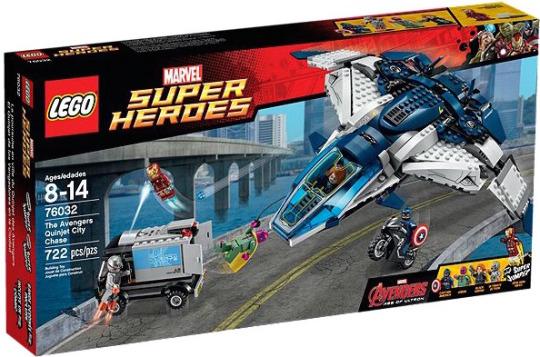
It gets worse. The Cycle Blast Quinjet is actually one of three licensed toys based on the Quinjet scene, none of which features Black Widow riding the motorcycle. In Lego’s Quinjet City Chase, Captain America gets the wheels — though Black Widow, to Lego’s credit, is included in the set. (She’s shown on the packaging flying the plane.)
Quinjet Chity Chase (Lego)
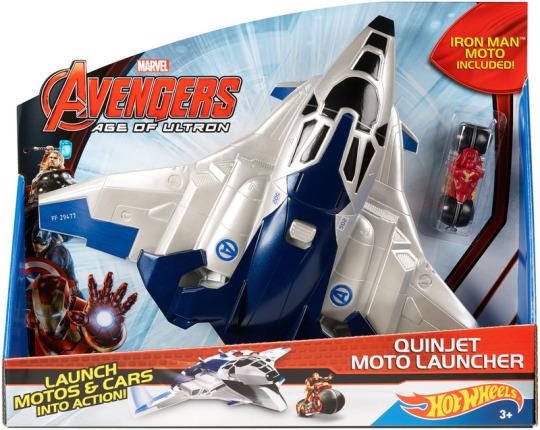
Then there’s the Hot Wheels Quinjet Moto Launcher from Mattel, which puts Iron Man on the motorcycle. That’s actually the worst offender, since unlike Black Widow and Cap, Iron Man doesn’t drive a motorcycle. (Why would he need one?) But it seems like toy companies would put Thor on a Harley before they’d consider giving Black Widow her ride back.
image
Hot Wheels Quinjet Moto Launcher (Mattel)
The Cycle Blast Quinjet can be used with “up to 4 figures (sold separately),” according to the description, so resourceful parents could swap in a Black Widow action figure — that is, if they can find one. As we’ve noted before, there’s very little out there in the way of Black Widow toys for kids, and almost nothing marketed specifically to girls. The Quinjet could have been a great toy for young Black Widow fans, capturing one of her best action-packed moments. Instead, it’s just another example of the one female Avenger being pushed out of the picture. 

Saturday, April 18, 2015

‘Angry Birds': The $185M Movie We Never Asked For


We live in the age of adaptations in Hollywood. Truthfully, the sooner we all come to terms with that, the sooner we can all enjoy the good ones, forget about the bad ones, and hopefully move on to more original works in the distant future. But in order to do that, it’s important to recognize the ones that have no place being adapted in the first place.
YA novels? Those are practically ripe for movie franchises and offer a vast, rich universe to work with. Even the worst ones have the potential to be entertaining films if done the right way. Comic books? They feature superheroes from all walks of life, with 50-plus years of stories ready to be plucked and blown into summer blockbusters. Phone apps? No. That’s it. Sorry, studios — thanks for playing, but no. Take a look at the history of adapting mobile games into successful movies for a moment. Odds are it took you all of three seconds, because it’s never been done, and for good reason. Enter Sony’s Angry Birds, set to hit theaters in May 2016.
It’s fairly simply to understand the basic concept of why Sony is about to whiff in a massive way on Angry Birds. Take, for example, the spotted history of video game movies. Not mobile games, mind you, but video games, replete with hours of gameplay, cutscenes, and characters. Throughout Hollywood’s history, these particular adaptations have almost never been successful. Whether it’s Super Mario Bros. or Resident Evil, Hollywood has struggled mightily to translate these massive universes into well-made 90-minute features. Odds are, a game originally designed for smartphones with the premise of throwing birds at buildings won’t be the one to break that trend.
But history isn’t the only thing working against Angry Birds. It recently came out that Rovio will be pouring $185 million into the budget for the movie, $100 million of which be directed toward marketing. More than half of the film’s budget won’t actually go into making it. Fifty-four percent, to be exact. That $100 million will be used to plaster birds all over billboards, toys at Walmart, and even the backs of airline seats, while whatever’s left will (presumably) be used to make the movie. It’s a harrowing demonstration of Sony’s knowledge that it’ll need to work hard to get butts in seats, and apparently the studio’s chosen strategy is to plaster as much Angry Birds merchandise and advertising across the known universe, a la Apple hocking the latest U2 album.
Maybe children will drag their parents to see the movie, kicking off a horribly profitable franchise that will never truly die. But the real truth of the matter is that Angry Birds has long since passed its shelf life. Other mobile games have risen in its place as the order of the day. Kids with attention spans comparable to Dory from Finding Nemo have likely moved on with their lives, meaning Sony’s target audience will have little to no interest. Rovio, the company that developed the game, has even seen consistent declines in profits as enthusiasm has waned, painting a bleak picture for the 2016 release date.
The Angry Birds movie is a bad idea for a whole list of reasons: artistically, financially, creatively, you name it. And yet Sony seems determined to make it happen despite the tidal wave of evidence saying that virtually no one wants this movie about to be crammed down our collective throats by a $100 million marketing campaign. We best get used to our aviary overlords before it’s too late. Come 2016, it’ll probably be difficult to turn a corner without being pelted in the face by the visage of a big red bird